-
Who This Checklist Is For
-
Step 1: Diagnose the Repair, Not Just the Part
-
Step 2: Verify the VIN and Part Number Before Searching
-
Step 3: Separate the Part From the Install Kit
-
Step 4: Get Three Quotes, but Compare the Same Scope
-
Step 5: Check What the Supplier Actually Specializes In
-
Step 6: Confirm Invoicing, Returns, and Warranty Before You Order
-
Step 7: Use a One-Page PO and Inspect the Work
-
Common Mistakes to Avoid
Who This Checklist Is For
If you manage vehicle repairs for a small company fleet but you are not a mechanic, this is for you. I am an office administrator for a 120-person company. I manage all fleet service ordering—roughly $85,000 annually across 14 vendors. I report to both operations and finance. That means I care about three things: keeping drivers on the road, not annoying the CFO, and having clean invoices.
This checklist covers the messy middle: Mando alternator wiring, where to buy Mando car parts, dirty throttle body cost, H11 headlight LED swaps, and how much it is to fix a muffler. There are 7 steps. Follow them in order.
Step 1: Diagnose the Repair, Not Just the Part
Most buyers focus on the part price and completely miss the labor, diagnostic, and core charges. The question everyone asks is 'What does the part cost?' The better question is 'What is the full repair outcome I am buying?'
For a dirty throttle body, the cheap path is cleaning. The expensive path is replacement. A dirty throttle body cost is usually $60–$120 for a cleaning at an independent shop, based on public repair estimates I checked in January 2025. If the throttle body itself is failing, replacement can run $250–$600 or more depending on the vehicle. Do not order a new throttle body until the shop confirms the issue is not just carbon buildup.
For an H11 headlight LED upgrade, the part is cheap. Compatibility is not. Some H11 LEDs trigger bulb-out warnings or fit poorly under dust covers. For a muffler, a patch or weld might be $50–$150. A full muffler replacement can be $200–$800, depending on whether you need pipe, flange, or converter work.
Ask the shop for a diagnosis code or a written symptom description before you approve any parts order. 'It sounds loud' is not a diagnosis.
Step 2: Verify the VIN and Part Number Before Searching
When you search where to buy Mando car parts, you will get a mix of OEM, OE, aftermarket, and counterfeit listings. Mando is a major OE supplier, but that does not mean every listing with the name is correct for your vehicle.
Get the VIN from the vehicle. Ask the shop for the OEM part number they recommend. Then match that number across at least two sources: a dealer parts portal and a reputable aftermarket catalog. If the listing says 'fits Mando' but does not list the OEM number, treat it as a maybe, not a yes.
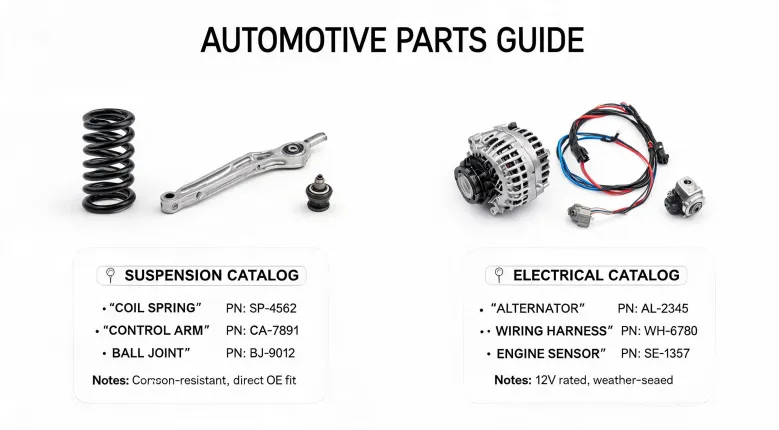
This is especially important for Mando alternator wiring. Alternator connectors, pin counts, and regulator plugs changed across model years. A used or aftermarket alternator can look identical but have the wrong plug. The wiring harness adapter might cost more than the alternator itself if you get it wrong.
Step 3: Separate the Part From the Install Kit
Here is the rookie mistake I made in my first year managing fleet repairs: I assumed 'alternator' meant everything needed to install it. It did not. The order arrived without the pigtail connector. Our shop had to source one locally at a marked-up price. Cost me a $180 surprise line item and a one-day delay.
For a Mando alternator wiring job, confirm whether the quote includes:
- Alternator
- Wiring pigtail or connector if the original is brittle
- Serpentine belt, if it is worn or contaminated
- Labor for relearn or voltage check
- Core charge and return shipping
For H11 LED, confirm whether you need CANbus-ready bulbs, dust cover extensions, or a resistor kit. For a muffler, confirm whether the quote includes new gaskets, hangers, and clamps. Those small parts add up.
Step 4: Get Three Quotes, but Compare the Same Scope
I said 'as soon as possible' to one vendor. They heard 'whenever convenient.' Result: the vehicle sat for four days. Since then, I put the scope in writing. For every repair, I ask for a quote with parts and labor separated.
Use a simple comparison. Here are ranges I have seen in public repair estimates as of January 2025:
- Dirty throttle body cost: $60–$120 for cleaning; $250–$600+ for replacement.
- H11 headlight LED: $30–$120 per pair for the bulbs; $0–$80 labor, depending on access.
- How much is it to fix a muffler: $50–$150 for a patch or weld; $200–$800 for replacement.
- Mando alternator wiring: alternator replacement often runs $400–$900 with labor, plus wiring repairs if the connector is damaged.
Verify current prices. These are planning numbers, not quotes. A luxury or commercial vehicle can be higher. A simple domestic sedan can be lower.
Step 5: Check What the Supplier Actually Specializes In
The vendor who said 'we do brakes and suspension, but we do not do electrical diagnosis—here is who does it better' earned my trust for everything else. I would rather work with a specialist who knows their limits than a generalist who overpromises.
When you look for where to buy Mando car parts, ask the supplier what they stock every day. If they are an alternator specialist, ask about wiring. If they are a body shop, ask about throttle body calibration. If they say yes to everything, slow down. Good suppliers will tell you when a dealer part or a different brand is the smarter call.
The best parts counter person is the one who says, 'For that VIN, I would not use this aftermarket version. Here is why.'
Step 6: Confirm Invoicing, Returns, and Warranty Before You Order
In 2023, I found a great price from a new vendor—$40 cheaper than our regular supplier. I ordered a pair of H11 LEDs and a replacement throttle body. They could not provide a proper invoice, only a handwritten receipt. Finance rejected the expense report. I ate the cost out of the department budget. Now I verify invoicing capability before placing any order.
Before you approve, get these in writing:
- Itemized invoice with part numbers and taxes
- Return policy for electrical parts, especially alternators and LEDs
- Warranty length and who pays labor if the part fails
- Core charge amount and return window
- Delivery date and shipping cost
For Mando alternator wiring, ask whether the warranty covers the connector if the plug fails. For LED bulbs, ask whether the warranty is void if they are installed in a housing not designed for LEDs. For muffler work, ask whether the warranty covers welds and labor.
Step 7: Use a One-Page PO and Inspect the Work
I use a one-page purchase order for every repair over $200. It includes the VIN, mileage, diagnosis, approved parts, labor cap, and expected completion date. The shop signs it. I sign it. Finance gets a copy. This prevents the 'while we were in there' upsell from turning into a surprise invoice.
When the vehicle comes back, do a five-minute check:
- Start the car and check for warning lights.
- Turn on the headlights and check both low and high beams.
- Listen for exhaust leaks at idle and under light acceleration.
- Check the invoice against the approved PO.
- Note the mileage and date for your fleet log.
Looking back, I should have started using a written PO years earlier. At the time, it felt like extra paperwork for a 20-car fleet. It is not. It is the difference between a clean month and a finance meeting you do not want.
Common Mistakes to Avoid
Most buyers focus on the headline price and completely miss the return shipping, core charge, and reinstall labor. Here are the ones I see most often:
- Buying H11 LEDs without checking housing clearance. Some bulbs are too long for the dust cap.
- Assuming a dirty throttle body needs replacement. Try cleaning first unless the shop proves the motor or sensor is bad.
- Ordering a Mando alternator without checking the plug. The wiring connector is the most common mismatch.
- Approving muffler work without a written scope. 'Fix the exhaust' can mean a $50 patch or an $800 system.
- Using a vendor who cannot invoice properly. The cheapest part is expensive when finance rejects the expense.
If you only remember one thing: buy the repair outcome, not the part number alone. That keeps your drivers moving and your invoices clean.