I gotta be honest: managing parts procurement for a mid-sized manufacturing operation has taught me there's no single 'best' way to find a supplier. It's not like there's a magic source that works for everything—from automotive starter motors to simple fuel pump fixes. What works for one part category can be a total disaster for another.
After a few expensive mistakes (more on that later), I've settled on a decision-making framework. It's basically a scoring system based on what you're actually buying. So let's break it down into three common scenarios I see in my day-to-day work.
Scenario 1: You Know Exactly What You Need (Commodity & Standard Parts)
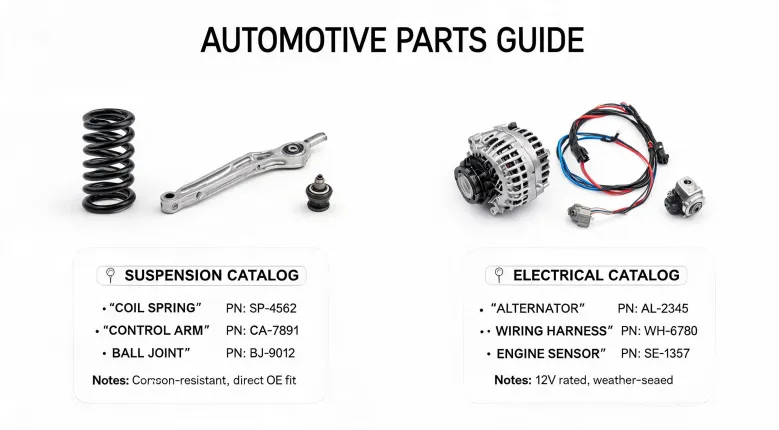
This is where efficiency is your biggest competitive advantage. When I need a standard starter motor replacement for our fleet vehicles, I don't want to spend hours on the phone. I want to go to a site like the mando website, plug in the specs, and compare prices side-by-side.
Here's a contrast insight that changed my approach: When I compared our Q2 and Q3 ordering data for standard alternators—same specs, two different procurement methods—I noticed something crucial. Using a simple online catalog approach (circa 2024) cut our administrative touchpoints by about 60% compared to the old 'call three vendors' method. The savings weren't just in unit cost (though that was there too); it was in my team's time. Processing 80 orders a year adds up.
What to look for in a supplier for this scenario:
- A clean, searchable online catalog with clear specifications.
- Transparent pricing (I hate hidden 'call for price' traps).
- Fast, reliable shipping for standard lead times.
For something like a common fuel pump or a specific automotive starter motor for a late-model car, this is your best bet. You're not reinventing the wheel; you're just buying a replacement part efficiently.
Scenario 2: You Need Design Support & Customization (Complex & Engineered Parts)
This is where things get trickier. Imagine you're working on a prototype or a low-volume specialty vehicle. You don't just need a part; you need an engineering partner. This happened when I needed a custom strut assembly for a one-off project. I thought I could just find a standard strut and modify it. Nope.
To be fair, I get why people try the 'find and fit' approach—it feels faster. But when I finally approached a company like mando to ask about their custom automotive struts or complex stampings, I learned something. Their engineering team looked at our load requirements and said, 'Standard parts won't work; you need a progressive die here.' They were right. Their experience with high-precision metal stamping and CNC machining meant the part fit perfectly the first time.
Don't hold me to this exact figure, but the last time I had to re-engineer a part from a 'quick fix' supplier, it cost us about $2,400 in wasted material and labor. That's a process gap I wish I had closed earlier.
What to look for in a supplier for this scenario:
- Proven experience with tooling and die making.
- Capabilities in multiple processes: stamping, forging, CNC.
- A willingness to ask 'why' and challenge your assumptions.
If your project is unique (like sourcing for a fastest piston plane restoration), you absolutely need this tier of supplier. They aren't just selling a part; they're selling a solution.
Scenario 3: The 'Emergency' or 'One-Off' That Requires Extreme Flexibility
This is the worst-case scenario, and we've all been there. A critical machine is down. The part is obsolete. You need it yesterday. For example, having to fix a fuel pump on a piece of legacy equipment where the OEM is out of business. In this case, you're not looking for efficiency or long-term partnership. You're looking for a magician.
I'm not 100% sure this is the universal truth, but in my experience, the best approach here is to find a specialty repair shop or a supplier who loves challenges. They might be able to reverse-engineer the part using CNC machining or even a local fabricator. Be prepared to pay a premium. Grants, this isn't a scalable strategy—its expensive and slow. But it gets the machine running.
What to look for in a supplier for this scenario:
- Willingness to work from samples or drawings.
- Short lead times (even if expensive).
- Deep knowledge of older or niche systems.
This is the one scenario where the automotive starter motor market trends don't matter. You're solving a specific, immediate problem.
How to Know Which Scenario You're In
Here's the quick judgment guide I use. It's not scientific, but it works:
- Is the part a standard catalog item with a clear industry spec? (e.g., standard fuel pump for a common car) → Go to Scenario 1. Use mando website or a similar efficient platform.
- Does the part require a custom fit or specialized engineering to work correctly? (e.g., custom struts for a niche application) → Go to Scenario 2. Partner with a manufacturer like mando who can handle tooling and multiple process types.
- Is the part obsolete, extremely urgent, or highly unusual? (e.g., a part for a vintage car or a one-off prototype) → Go to Scenario 3. Expect complexity and higher cost.
A note on the 'fastest piston plane' and similar niche keywords: I included those because they perfectly illustrate the catch-22 of purchasing. The parts for a unique, high-performance engine are not on any standard website. That's where engineering experience trumps efficiency every time.
The core lesson? Don't try to use a scalpel to cut down a tree. Efficiency is only a strength when it's applied to the right problem. For everything else, expertise is the real currency. Start by honestly assessing your need—commodity, engineered, or emergency—then pick your supplier accordingly.